




Product Information
Rp 450.000
A NEW LEVEL OF SENSITIVITY.
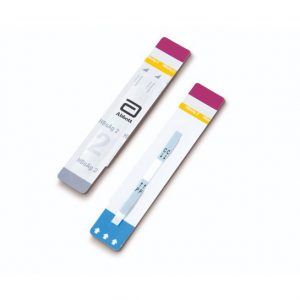
Determine HBsAg 2 test is rapid, accurate Hepatitis B Virus (HBV) screening in many healthcare settings
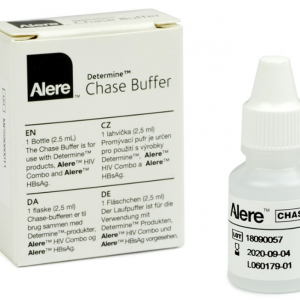
*Pembelian kit belum termasuk cairan chase buffer

LEAVE NO PATIENTS BEHIND

Determine™ HBsAg 2, with an analytical sensitivity of just 0.1 IU/mL, is a highly sensitive, easy-to-use rapid lateral flow test

Enables accurate identification of HBsAg-positive patients with results in just 15 minutes

Detects major HBsAg vaccine escape mutants

Ideal for use in a wide variety of healthcare settings

These deaths could be prevented with vaccination and protective measures.
In high HBV prevalence areas, the WHO recommends that all adults have routine access to and be offered HBsAg serological testing with linkage to prevention, care and treatment services. ²
Here are some concrete actions to take once these populations are screened:

Prevent HBV infection by identifying persons suitable for vaccination.

Prevent HBV transmission by identifying and educating all infected people.

Prevent health deterioration by providing recommendations on food and medicines for infected people to avoid.

Provide treatment to patients who need it.
FROM THE FEBRUARY 2017 GUIDELINES ON HEPATITIS B AND C TESTING, AS WRITTEN BY THE WORLD HEALTH ORGANIZATION (WHO)
WHO TO TEST FOR CHRONIC HBV INFECTION
TESTING APPROACH AND POPULATION
RECOMMENDATIONS*
General population testing
- In settings with a ≥2% or ≥5% 1 HBsAg seroprevalence in the general population, it is recommended that all adults have routine access to and be offered HBsAg serological testing with linkage to prevention, care and treatment services.
General population testing approaches should make use of existing community- or health facility-based testing opportunities or programmes such as at antenatal clinics, HIV or TB clinics.
Conditional recommendation, low quality of evidence
Routine testing in pregnant women
- In settings with a ≥2% or ≥5% 1 HBsAg seroprevalence in the general population, it is recommended that HBsAg serological testing be routinely offered to all pregnant women in antenatal clinics 2 , with linkage to prevention, care and treatment services. Couples and partners in antenatal care settings should be offered HBV testing services.
Strong recommendation, low quality of evidence
Focused testing in most affected populations
- In all settings (and regardless of whether delivered through facility- or community-based testing), it is recommended that HBsAg serological testing and linkage to care and treatment services be offered to the following individuals:
- Adults and adolescents from populations most affected by HBV infection 3 (i.e. who are either part of a population with high HBV seroprevalence or who have a history of exposures and/or high-risk behaviours for HBV infection);
- Adults, adolescents and children with a clinical suspicion of chronic viral hepatitis 4 (i.e. symptoms, signs, laboratory markers);
- Sexual partners, children and other family members, and close household contacts of those with HBV infection 5 ;
- Health-care workers: in all settings, it is recommended that HBsAg serological testing be offered and hepatitis B vaccination given to all health-care workers who have not been vaccinated previously (Adapted from existing guidance on Hepatitis B vaccination 6)
Strong recommendation, low quality of evidence
Blood donors
Adapted from existing 2010 WHO guidance (Screening donated blood for transfusion
transmissible infections 7)
- In all settings, screening of blood donors should be mandatory with linkage to care, counselling and treatment for those who test positive.
- A threshold of ≥2% or ≥5% seroprevalence was based on several published thresholds of intermediate or high seroprevalence. The threshold used will depend on other country considerations and epidemiological context.
- Many countries have chosen to adopt routine testing in all pregnant women, regardless of seroprevalence in the general population, and particularly where seroprevalence ≥2%. A full vaccination schedule including birth dose should be completed in all infants, in accordance with WHO position paper on Hepatitis B vaccines 2009.6
- Includes those who are either part of a population with higher seroprevalence (e.g. some mobile/migrant populations from high/intermediate endemic countries, and certain indigenous populations) or who have a history of exposures or high-risk behaviours for HBV infection (e.g. PWID, people in prisons and other closed settings, MSM and sex workers, HIV-infected persons, partners, family members and children of HBV infected persons).
- Features that may indicate underlying chronic HBV infection include clinical evidence of existing liver disease, such as cirrhosis or hepatocellular carcinoma (HCC), or where there is unexplained liver disease, including abnormal liver function tests or liver ultrasound.
- In all settings, it is recommended that HBsAg serological testing with hepatitis B vaccination of those who are HBsAg negative and not previously vaccinated be offered to all children with parents or siblings diagnosed with HBV infection or with clinical suspicion of hepatitis, through community- or facility-based testing.
- WHO position paper. Hepatitis B vaccines. Weekly epidemiological record. 2009;4 (84):405–20.
- Screening donated blood for transfusion transmissible infections. Geneva: World Health Organization; 2010
Original Source:
World Health Organization. Guidelines on Hepatitis B and C Testing February 2017. https://apps.who.int/iris/bitstream/handle/10665/254621/9789241549981-eng.
pdf;jsessionid=36D2C766E7471A095B4CC9D485E5F601?sequence=1. Updated 2017. Accessed March 2020.
Please note that the Determine™ HBsAg 2 should not be used for screening of donated blood.
DETERMINE™ HBSAG 2 IS SIMPLE TO USE AND FACILITATES RAPID AND ACCURATE HEPATITIS B DIAGNOSIS IN MANY HEALTHCARE SETTINGS
SIMPLE PROCEDURE

ORDER INFORMATION
| PRODUCT NAME | PRODUCT CODE |
|---|---|
| Determine ™ HBsAg 2 (20 Tests, CE) | 7D2946 |
| Determine ™ HBsAg 2 (100 Tests, CE) | 7D2947 |
| Determine ™ HBsAg 2 (20 Tests, Non-CE) | 7D2942 |
| Determine ™ HBsAg 2 (100 Tests, Non-CE) | 7D2943 |
| Determine ™ HBsAg 2 SET (Non-CE) Includes 100 Tests, Chase Buffer, 100 EDTA Capillaries, 100 Sterilized Blood Lancets |
7D2943SET |
| Chase Buffer (2.5 mL, 100 Tests) | 7D2243 |
| EDTA Capillaries (100 Tests, CE) | 7D2227 |
| EDTA Capillaries (100 Tests, Non-CE) | 7D2222 |
PRODUCT SPECIFICATIONS
| Method | Lateral Flow |
| Sensitivity | Analytical Sensitivity of 0.1 IU/mL |
| Specificity | 99.6 % |
| Time to Result | 15 Minutes |
| Storage Conditions | 2°C–30°C |
| Test Conditions | 18°C–40°C |
| Sample Volume | 50 μL |
| Test Shelf Life | 18 Months |
| Sample Types | Serum/Plasma, Fingerstick Whole Blood and Venipuncture Whole Blood |
- WHO Hepatitis B Key Facts July 18 2019. https://www.who.int/news-room/fact-sheets/detail/hepatitis-b.
- WHO Guidelines on Hepatitis B and C Testing, Feb 2017. https://apps.who.int/iris/bitstream/handle/10665/254621/9789241549981-eng.pdf;jsessionid=36D2C766E7471A095B4CC9D485E5F601?sequence=1
| Weight | 0,2 kg |
|---|
| No | Spesifikasi | Product |
|---|---|---|
| 1 | Nama Produk | DETERMINE™ HBsAg 2 |
| 2 | Merk | DETERMINE |
| 3 | Pabrik | Abbott Diagnostic Medical Co., Ltd. Chiba, Japan |
| 4 | Negara Asal | Jepang |
| 5 | Prinsip Pemeriksaan | Immunochromatography Test |
| 6 | Kemasan | 1 boks terdiri atas;
|
| 7 | Kemampuan Deteksi |
|
| 8 | Hasil Test | Kualitatif |
| 9 | Spesimen | Serum, Plasma, Whole blood |
| 10 | Volume Sampel | 50 µl serum/plasma/whole blood (khusus whole blood ditambahkan 1 tetes Chase Buffer) |
| 11 | Sensitivitas & Spesifisitas | Sensitivitas 98,6% dan Spesifisitas 100% |
| 12 | Suhu Penyimpanan | 2-30ºC |
| 13 | Kadaluarsa | 18 bulan dari tanggal produksi |
| 14 | No Katalog | 7D2942 |
| 15 | Registrasi | Terdaftar di Kementrian Kesehatan RI |
| 16 | No Registrasi | KEMENKES RI AKL 20305911113 |

Rp 665.297
Related products
Reviews
There are no reviews yet.